
Being the “Only” Is a Superpower
Some of my most significant accomplishments were not achieved in spite of being the “only” — they were achieved because of it.
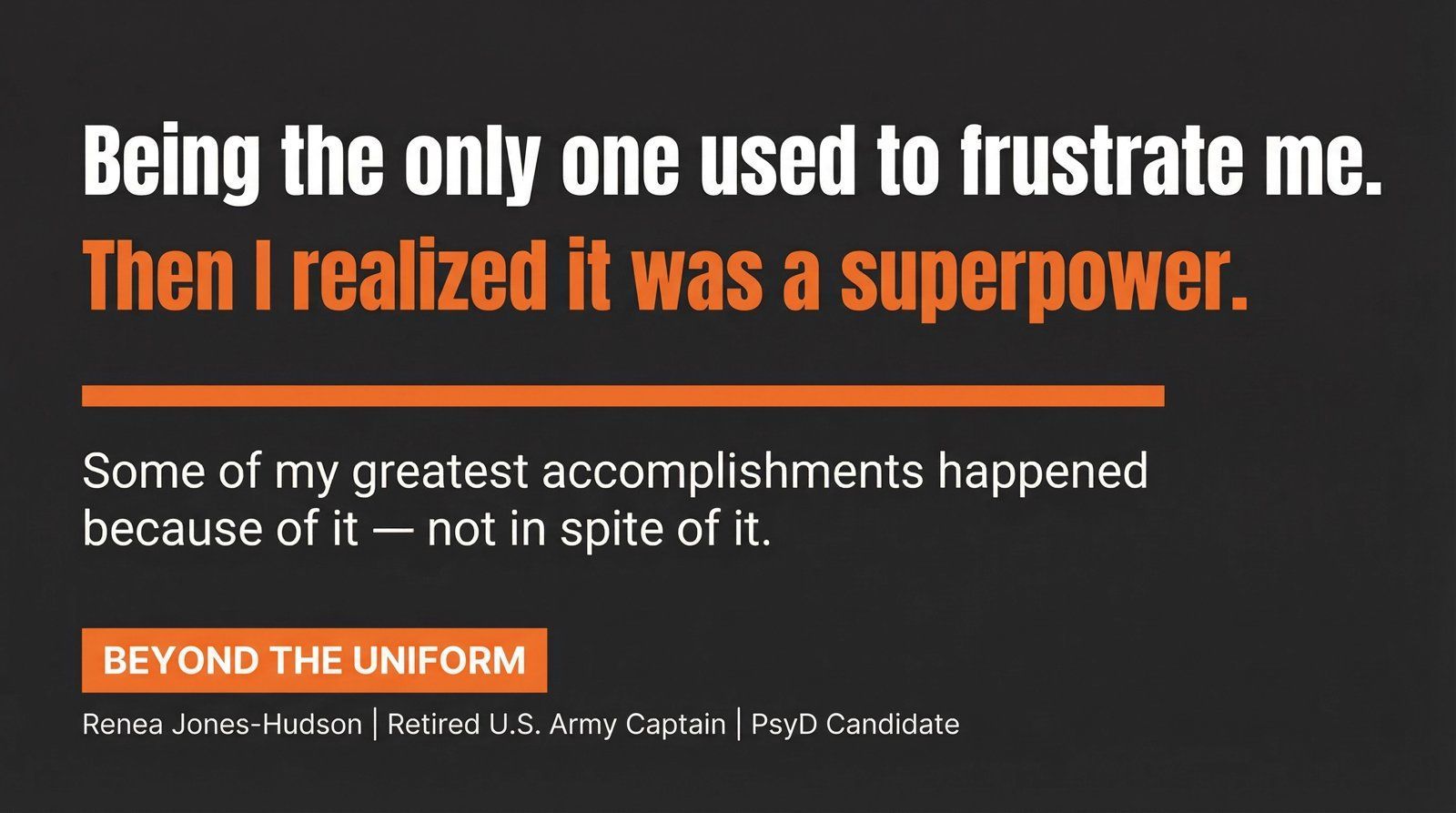
For years, I carried a deep frustration about being the "only." I was tired of being the exception... My perspective shifted profoundly after I had the honor of hearing Elizabeth Stephens speak at an ATLVets speaker series. She challenged my entire thought process. Listening to her, I began to realize that some of my most significant accomplishments in the military were not achieved in spite of being the "only" — they were achieved because of it.
If you served as a woman in the military, you know what it means to be the "only."
The only woman in the platoon. The only woman in the briefing room. The only woman at the table. Sometimes the only woman in the entire building.
That experience is exhausting. It is also — and I want you to hear this clearly — one of the most powerful leadership development experiences a person can have.
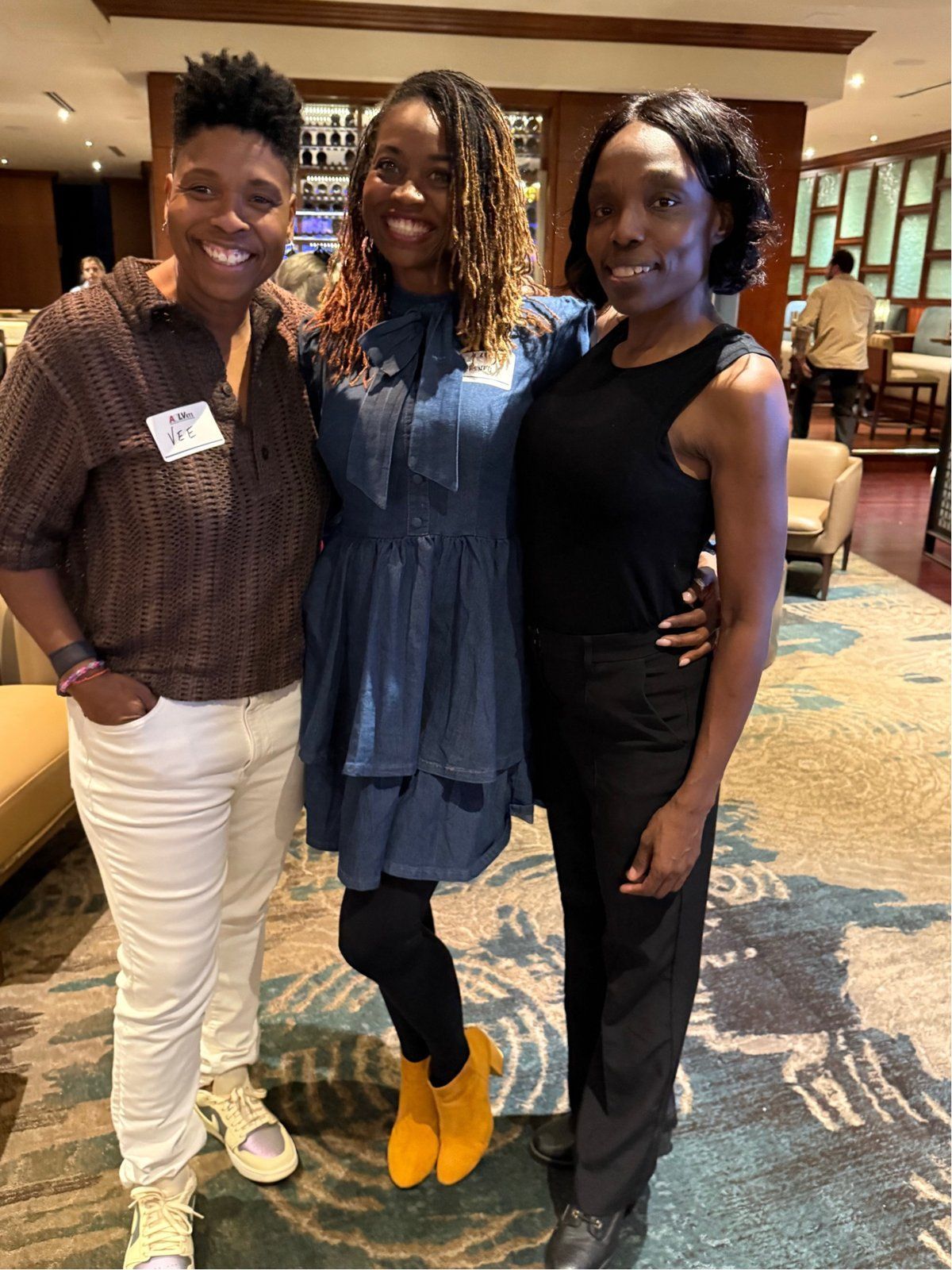
Renea Jones-Hudson (center) with Vernice "FlyGirl" Armour (left) and Elizabeth Stephens (right) at the ATLVets speaker series.
The Weight of Being the Only
Let us be honest about what the experience actually costs before we talk about what it builds.
A 2025 systematic review of 19 qualitative studies of veterans across five countries described how, as women attempted to assimilate into the masculine military culture, they paradoxically became "hyper-visible" as minority members — more conspicuous, not less [1]. Their gender was never invisible. It was always a variable in how they were perceived, evaluated, and treated.
The review also found that women felt continuous pressure to perform at a high level just to be seen as equal to men. Their mistakes were not treated as individual mistakes; they were seen as confirmation of inadequacy and as reflecting poorly on other women in uniform [1]. The stakes of every performance were amplified. There was no margin for the kind of ordinary failure that men were routinely permitted.
Alfred Adler would have recognized this dynamic immediately. He wrote extensively about what he called the masculine protest — the push, in a culture that devalues the feminine, to reject femininity and prove oneself by masculine standards [2]. He was clear that this pressure was not a reflection of women's actual capacity. It was a reflection of a social structure that devalued women by design.
The weight is real. The inequity is real. And naming it is not complaining — it is diagnosis.
What the 'Only' Builds
But here is what the research also shows, and what I now know from lived experience: the experience of being the "only" forges something that cannot be taught in a classroom or acquired in a comfortable environment.
It builds a calibrated self-awareness that most people never develop. When you cannot blend in, you are forced to know exactly who you are. You cannot coast on group identity or borrowed confidence. You have to find your own.
It builds the capacity to lead without validation. When you are the only one who looks like you in the room, you quickly learn that waiting for external approval is a losing strategy. You develop the ability to trust your own judgment, to act on your own conviction, and to move forward without consensus — which is, incidentally, exactly what the most effective leaders do.
It builds a perspective that is genuinely rare and genuinely valuable. Research on team diversity has found that diverse teams tend to be more creative [3]. The woman who has operated as the "only" brings a vantage point that homogeneous groups simply do not have. That vantage point is not a consolation prize. It is a competitive advantage.
And it builds resilience — not the performative kind, but the deep, structural kind that comes from having been tested and having held.
The OWNIT™ Framework: A Map for the Journey
Adler believed that the striving to overcome feelings of inferiority — when directed toward contribution rather than compensation — was the engine of human growth and achievement [2]. He called this healthy striving social interest, or Gemeinschaftsgefühl: the drive to contribute to the community, to use one's unique gifts in service of something larger than oneself.
For women veterans who have been the "only," this framework offers a powerful reframe. The very experiences that were meant to diminish you — the hypervisibility, the double standard, the pressure to prove yourself — are also the experiences that developed your capacity to lead in complex, ambiguous, high-stakes environments. That capacity is exactly what the civilian world needs, and exactly what most people have not been tested enough to develop.
O – Own Your Story: Your experience as the "only" is not a footnote. It is a chapter — and it is one of the most important ones. Own it. Tell it. Use it to connect with others who have felt the same weight and need to know it can be transformed.
W – Work Your Gift: The gifts that were forged in the fire of being the "only" — the self-awareness, the resilience, the perspective, the capacity to lead without validation — are rare. Find the environments where they matter most, and show up fully.
N – Navigate the Change: Transitioning from a world where you were the "only" to a world where you are one of many can be its own kind of disorientation. The skills you developed in isolation may need to be recalibrated for collaboration. That is not a loss — it is an expansion.
I – Ignite Impact: The "only" who becomes a mentor, a leader, a voice — that is where the superpower multiplies. Your investment in yourself is also an investment in every woman who comes after you.
T – Take Bold Action & Thrive: The legacy of the "only" is not built by waiting for permission. It is built by showing up, leading out loud, and refusing to make yourself small in rooms that were not designed for you.
The Legacy of the 'Only'
You were the "only" because you were the first. And because you were the first, someone else does not have to be.
That is not a burden. That is a superpower.
Own it.
The OWNIT™ Framework is a proprietary group coaching methodology developed by Renea Jones-Hudson, founder of Beyond the Uniform Coaching and Consulting Group LLC.
References
- Smith, A., Rafferty, L., Croak, B., Greenberg, N., Khan, R., Langston, V., Sharp, M.-L., Stagg, A., Fear, N., & Stevelink, S. (2025). A systematic review of military-to-civilian transition: The role of gender. PLOS ONE, 20(2), e0316448. https://doi.org/10.1371/journal.pone.0316448
- Cedeno, R., & Torrico, T. J. (2024). Adlerian therapy. In StatPearls. StatPearls Publishing. https://www.ncbi.nlm.nih.gov/books/NBK599518/
- Stahl, G. K., Maznevski, M. L., Voigt, A., & Jonsen, K. (2010). Unraveling the effects of cultural diversity in teams: A meta-analysis of research on multicultural work groups. Journal of International Business Studies, 41(4), 690–709. https://doi.org/10.1057/jibs.2009.85
Ready to lead beyond the uniform? Every engagement starts with a conversation. Book a discovery call with Renea.
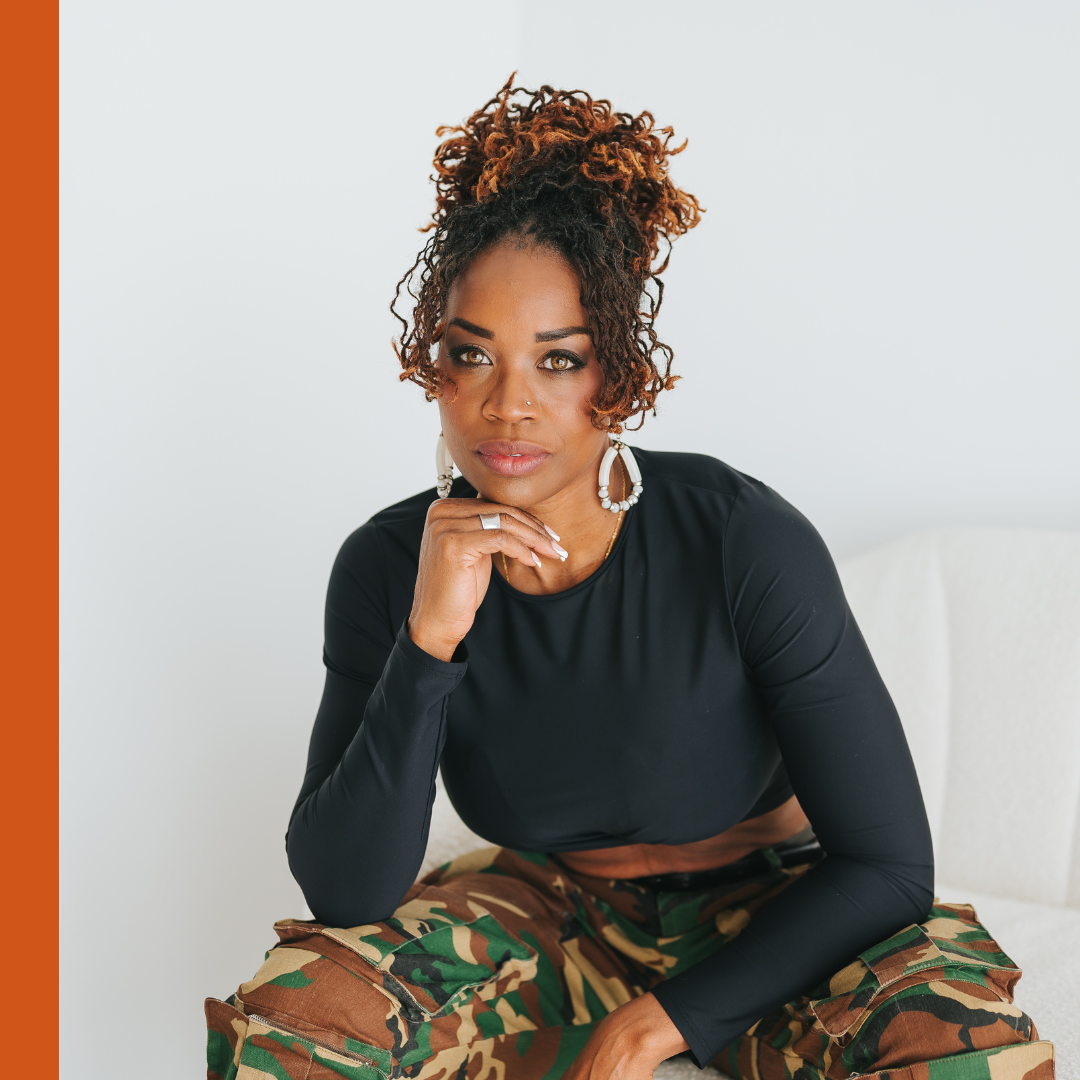
I’m Renea Jones-Hudson
Retired U.S. Army Captain, PsyD candidate, and founder of Beyond the Uniform. I help women veterans own their story and lead with confidence after service through OWNIT group coaching, speaking, and community.

Download your copy of the OWNIT Workbook