
How Your Mindset Predicts Your Transition Outcome
Two veterans. Same background. Completely different outcomes.
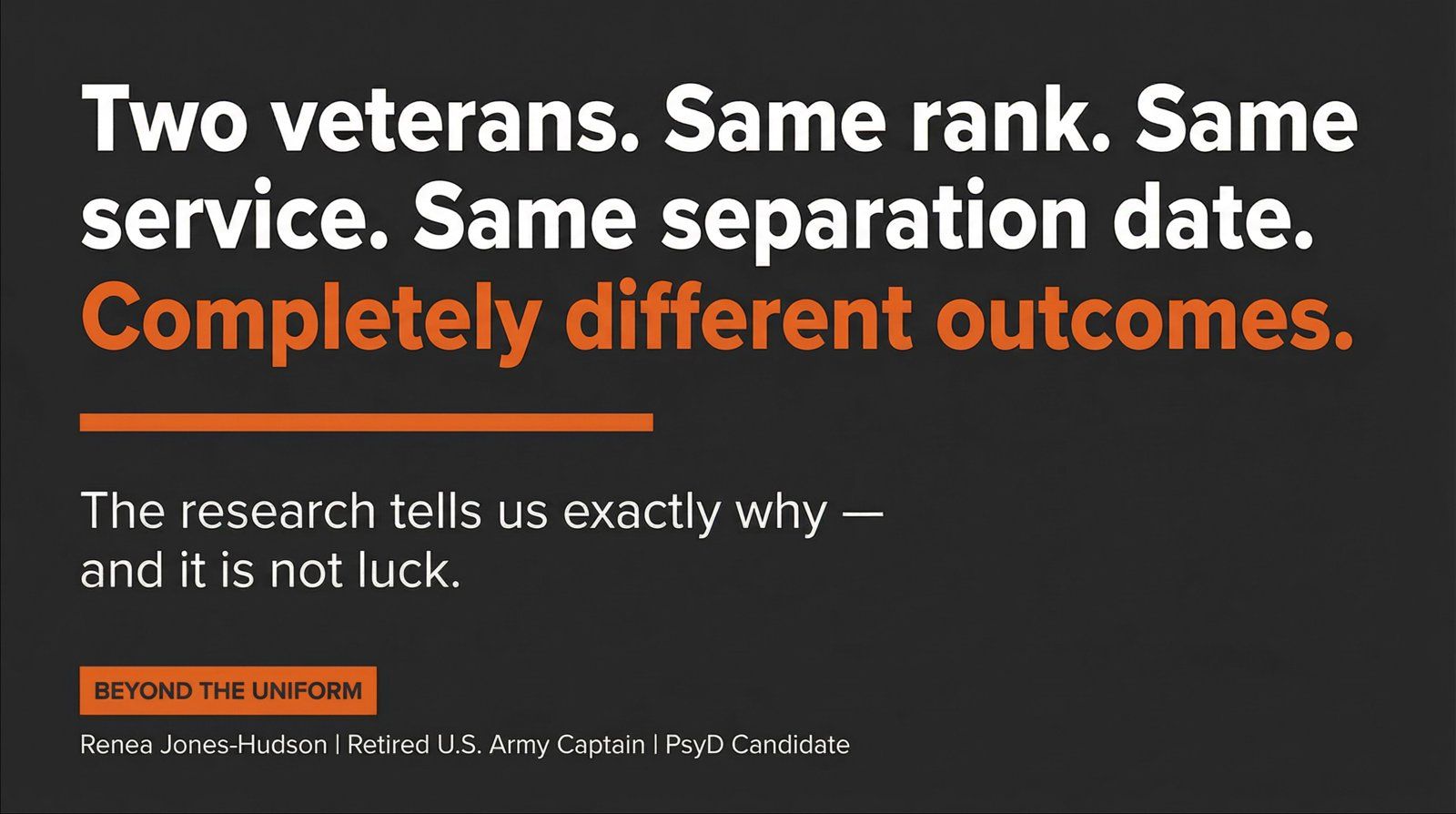
Picture two women veterans. Same rank. Same years of service. Same branch. Same separation date. Same general circumstances when they walked out the gate for the last time.
Eighteen months later, one of them has built a new career, found her footing, and reconnected with a sense of purpose. The other is still stuck in the same loop of frustration, confusion, and self-doubt she was in on day one.
What made the difference? Luck, connections, and the job market all play a part. But research points to something else as well — internal and social resources that every veteran can work on.
What the Research Shows
Researchers studying Canadian veterans have found that those with a high sense of mastery — a sense of control over their life circumstances — a strong sense of community belonging, low life stress, and moderate to high social support had a significantly lower prevalence of difficult adjustment to civilian life [1]. A 2023 study of veterans and their spouses found that veterans' social support and sense of community belonging were associated with fewer perceived transition challenges [1].
Optimism matters too. In a nationally representative study of U.S. veterans with PTSD, higher dispositional optimism was associated with lower risk of also having depression, even after accounting for other risk factors [2]. And in a 37-year study of repatriated prisoners of war, optimism was the strongest predictor of resilience among the factors studied [3].
In plain language: your internal orientation and your connections shape how transition feels — not just your external circumstances.
Three Internal Resources That Matter
Optimism — not toxic positivity, but the genuine belief that the future still holds possibility. It is not pretending everything is fine. It is choosing to believe that something good is still possible, even amid real uncertainty.
Self-efficacy — the belief in your own ability to figure things out. Researchers have long linked perceived coping self-efficacy to recovery after hard experiences [1]. The veteran who trusts her ability to navigate unfamiliar territory takes action, asks for help, and tries things. The one who waits until she feels ready, until she has all the answers, is the one who stays stuck.
Resilience — the ability to absorb setbacks without losing forward momentum. Transition involves rejection, confusion, and the particular frustration of being exceptional at something that no longer applies. Resilience does not mean avoiding those experiences. It means moving through them without letting them write the final chapter.
This Is Not About Being Positive. It Is About Being Prepared.
I want to be direct: mindset is not the only thing that matters. The structural failures in the transition system are real. Employers who do not understand military experience are real. The healthcare gaps, the financial pressures, the isolation — all of it is real.
But here is the empowering part. Unlike the job market, internal and social resources can be built. You cannot always control how civilians perceive your experience. You can control how you orient yourself toward the transition and who you surround yourself with.
How OWNIT™ Builds These Resources
The OWNIT™ Framework is grounded in exactly this understanding. Own Your Story is about claiming agency over how you interpret your experience — that is self-efficacy. Navigate the Change is about approaching uncertainty with a sense of possibility rather than paralysis — that is optimism. Take Bold Action & Thrive is about building the confidence that comes from doing hard things and surviving them — that is resilience. And because OWNIT is group coaching, it builds the community belonging the research keeps pointing to.
The women I work with are not lacking in capability. They are lacking the specific internal resources transition requires — and those resources can be developed with the right support, the right community, and the right framework.
The OWNIT™ Framework is a proprietary group coaching methodology developed by Renea Jones-Hudson, founder of Beyond the Uniform Coaching and Consulting Group LLC.
References
- Lee, J. E. C., Pearce, K., & Thapa, S. (2023). Psychosocial factors and military-to-civilian transition challenges: A dyadic analysis of Veterans and their spouses. Journal of Military, Veteran and Family Health, 9(3), 27–40. https://doi.org/10.3138/jmvfh-2022-0015
- Nichter, B., Haller, M., Norman, S., & Pietrzak, R. H. (2020). Risk and protective factors associated with comorbid PTSD and depression in U.S. military veterans: Results from the National Health and Resilience in Veterans Study. Journal of Psychiatric Research, 121, 56–61. https://doi.org/10.1016/j.jpsychires.2019.11.008
- Segovia, F., Moore, J. L., Linnville, S. E., Hoyt, R. E., & Hain, R. E. (2012). Optimism predicts resilience in repatriated prisoners of war: A 37-year longitudinal study. Journal of Traumatic Stress, 25(3), 330–336. https://doi.org/10.1002/jts.21691
Ready to lead beyond the uniform? Every engagement starts with a conversation. Book a discovery call with Renea.
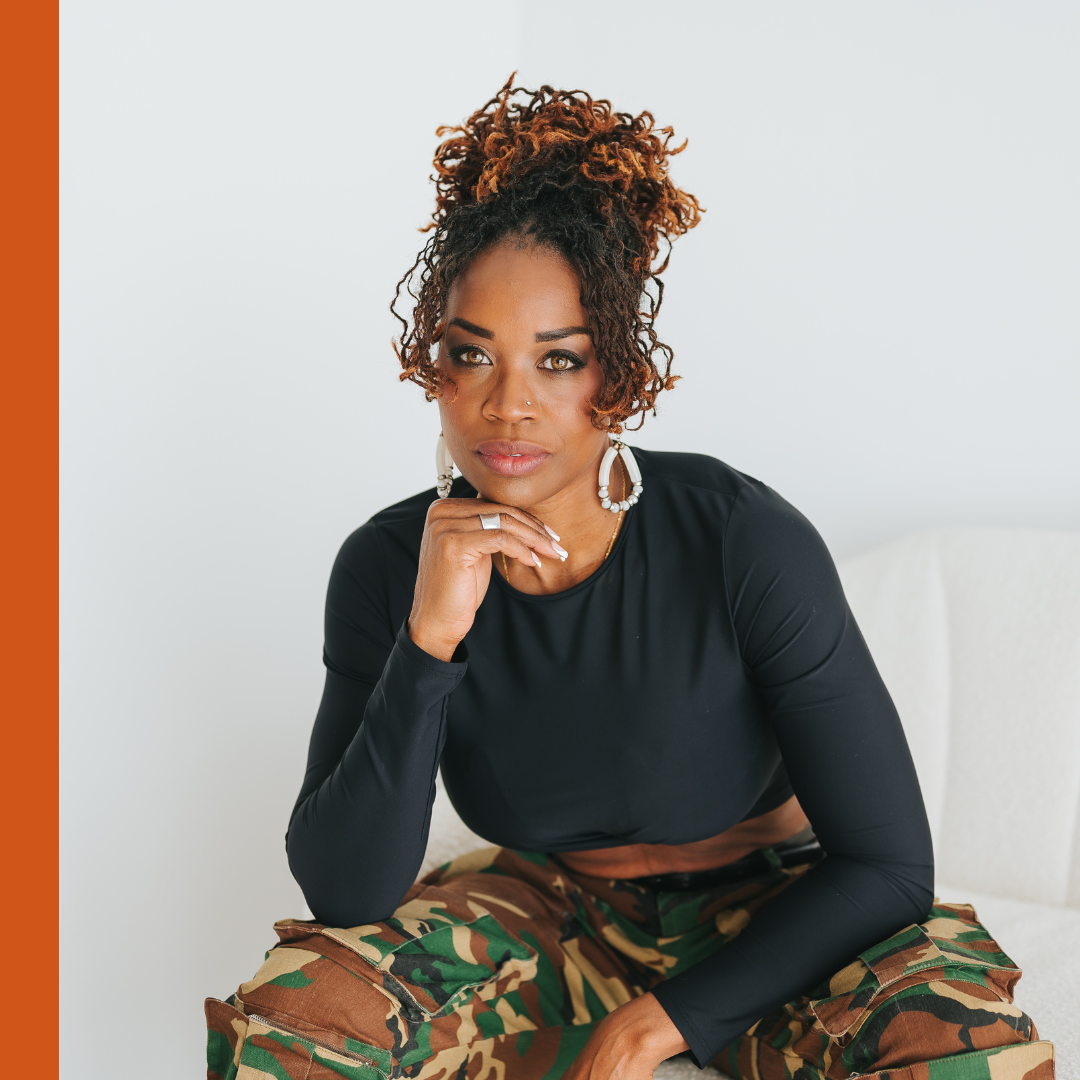
I’m Renea Jones-Hudson
Retired U.S. Army Captain, PsyD candidate, and founder of Beyond the Uniform. I help women veterans own their story and lead with confidence after service through OWNIT group coaching, speaking, and community.

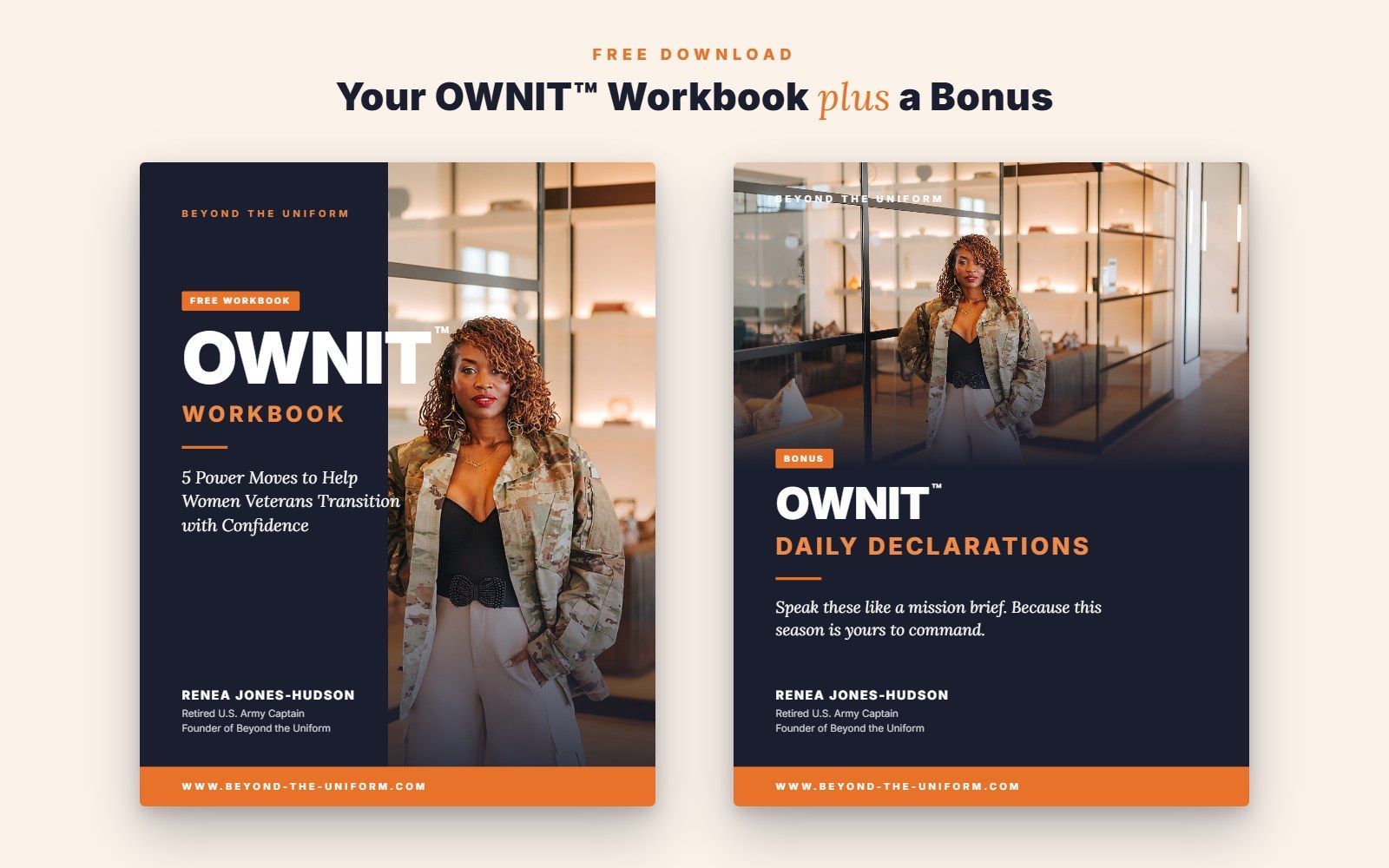
Download your copy of the OWNIT Workbook