

The 4 Stages Every Woman Veteran Goes Through After Separation
What you are going through has a name — and a path through it.
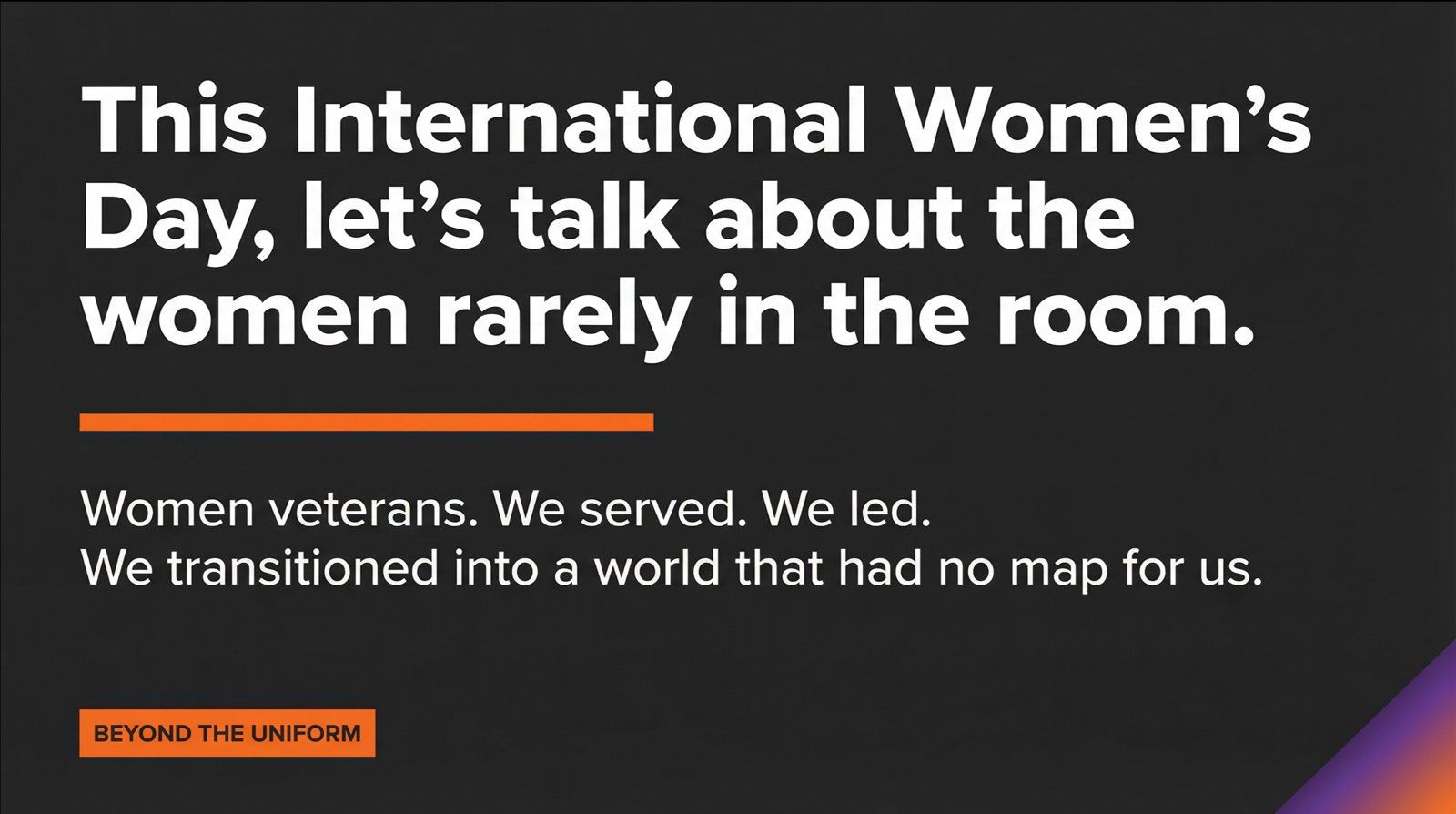
Women veterans. We served. We led. We transitioned into a world that had no map for us.
We spent years — sometimes decades — serving this country. We led soldiers. We made decisions under pressure that most people will never face. And then one day, we took the uniform off and stepped into a civilian world that had absolutely no idea what to do with us.
Not because we were not capable. We were — and still are — among the most capable leaders in any room we enter. But because the world we stepped into had no framework for what we carried, no language for what we had lost, and no roadmap for what came next.
What Transition Actually Looks Like
When most people think about veteran transition, they think about the practical stuff. The resume. The job search. The LinkedIn profile. The interview prep. Those things matter. But they are not the hardest part.
The hardest part is the identity shift that happens when the structure, the mission, the rank, the belonging, and the daily sense of purpose disappear — all at once. For many women veterans, transition is not just a career change. It is an identity crisis. And no one told us that was coming.
What the Research Found
In her 2023 doctoral dissertation, Dr. Kimberly Hardy conducted a grounded theory study — 23 semi-structured interviews with women veterans — to understand how women develop their civilian identities after separation [1]. Her data produced 343 initial codes, 23 categories, and six themes. What emerged was a four-stage theory of identity development that maps the psychological arc of transition.
Stage One: Longing for freedom. It begins before separation — a longing for civilian life that is more fantasy than reality. Seventeen of the 23 women described viewing civilian life as "relaxing" or free from the constraints of service. The reality, as most of them discovered, was far more complex.
Stage Two: Decoding civilian culture. Women in this stage are not passive. They are actively observing, studying, and trying to understand the unspoken rules of a world that was not built with them in mind. One participant described civilian life as "bizarro world."
Stage Three: "Who am I now?" This is where the identity crisis deepens. Fourteen of the 23 women explicitly asked "who am I now?" — both as an existential question and as a practical one about how to present themselves professionally and personally. Eleven spontaneously mentioned mental health concerns during this stage, including anxiety, depression, and PTSD, and the particular weight of feeling they could not ask for help.
Stage Four: Living authentically. Not all participants had reached it at the time of the study. Some were still working toward it. Hardy likened it to Maslow's self-actualization — the goal, not a guaranteed destination.
This is not a personal failure. It is a documented, predictable process that most transition programs never address.
I Lived Every One of These Stages
When I retired from the Army, I did not have a plan. I had a feeling. I was ready for something different. I had given more than two decades to this country — thirteen years enlisted, then Officer Candidate School, then commissioned service. And I was done. I thought that being done was enough.
It was not.
I opened a fitness studio. It made sense at the time. The military had trained me to execute, and I was executing. What I did not have was a business background, or a roadmap for what happens when the initial momentum fades and the hard questions start.
I fell into the comparison trap. I watched other fitness entrepreneurs on social media and measured my story against theirs. That was never my story. Focusing on what everyone else was doing made me water down my own accomplishments and question everything. Who am I? What am I good at? What am I supposed to be doing now?
When I read Hardy's research, I did not just recognize it academically. I recognized my own life. The longing for freedom before I got out. The disorientation of decoding a civilian world with no shared language. The identity crisis. And eventually, after doing the real work, the arrival at something authentic — a purpose that was mine, a voice that was mine, a direction that was not borrowed from anyone else's story.
That work became Beyond the Uniform.
What This Means for You
If you are somewhere in the middle of this right now — if you feel capable on the outside but lost on the inside, if you are questioning whether you made the right call — hear this: you are not broken. You are in a process. And the process has a path through it.
The gap in most transition programs is not information. Women veterans know how to research, plan, and execute. The gap is identity. The women who thrive beyond the uniform are not the ones who simply updated their resume. They are the ones who did the harder work of understanding who they are outside the structure that defined them — and who had support to do it.
If you know a woman veteran navigating transition right now, send her this. She needs to know that what she is going through has a name.
References
- Hardy, K. (2023). Process of identity development among women veterans who are transitioning from military to civilian life [Doctoral dissertation, University of the Cumberlands]. ProQuest Dissertations and Theses. https://www.proquest.com/openview/124441d16692aebdf1f42ea8dfd2acc8
Ready to lead beyond the uniform? Every engagement starts with a conversation. Book a discovery call with Renea.
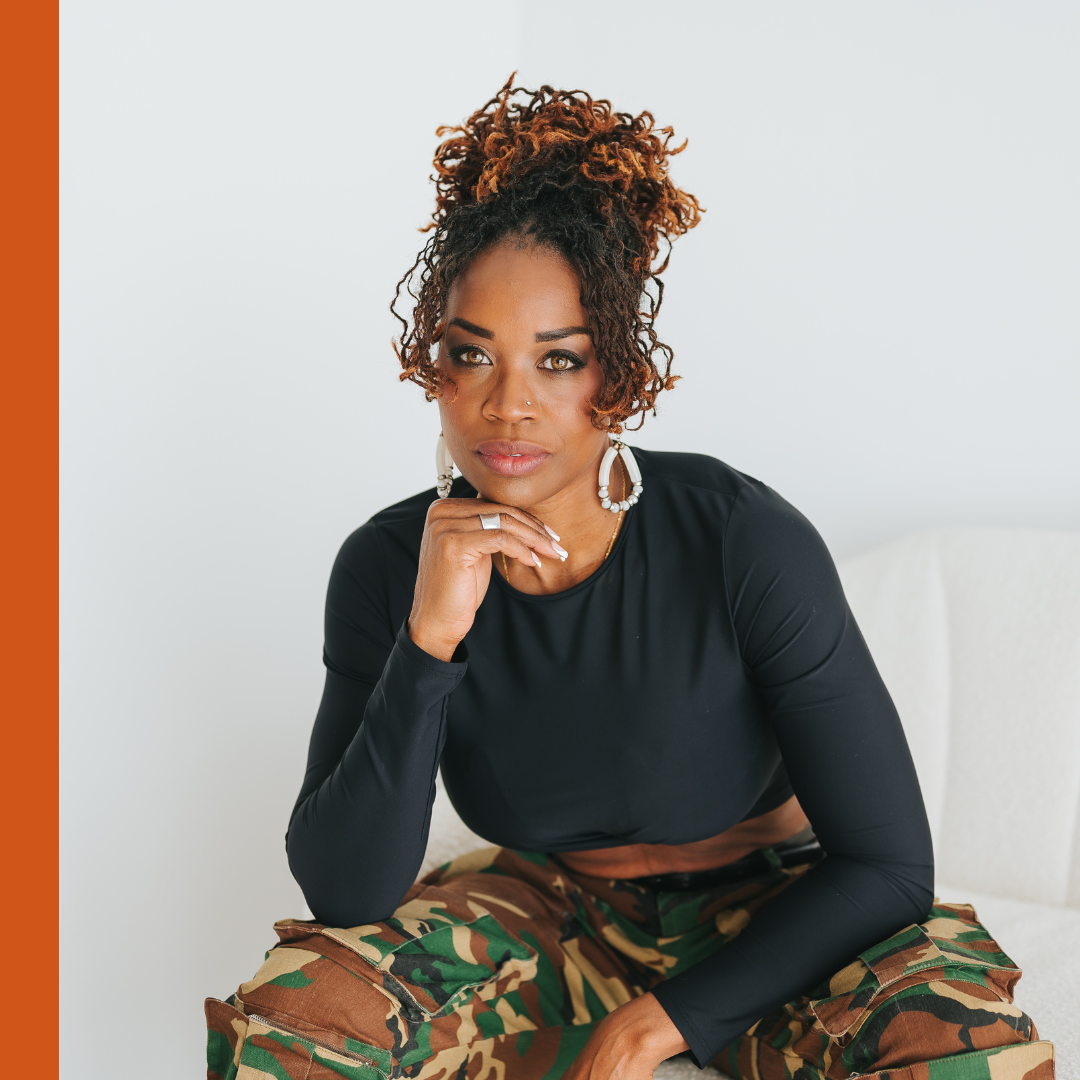
I’m Renea Jones-Hudson
Retired U.S. Army Captain, PsyD candidate, and founder of Beyond the Uniform. I help women veterans own their story and lead with confidence after service through OWNIT group coaching, speaking, and community.

Download your copy of the OWNIT Workbook