

The Invisible Veteran: Why Women Don't Claim the Title
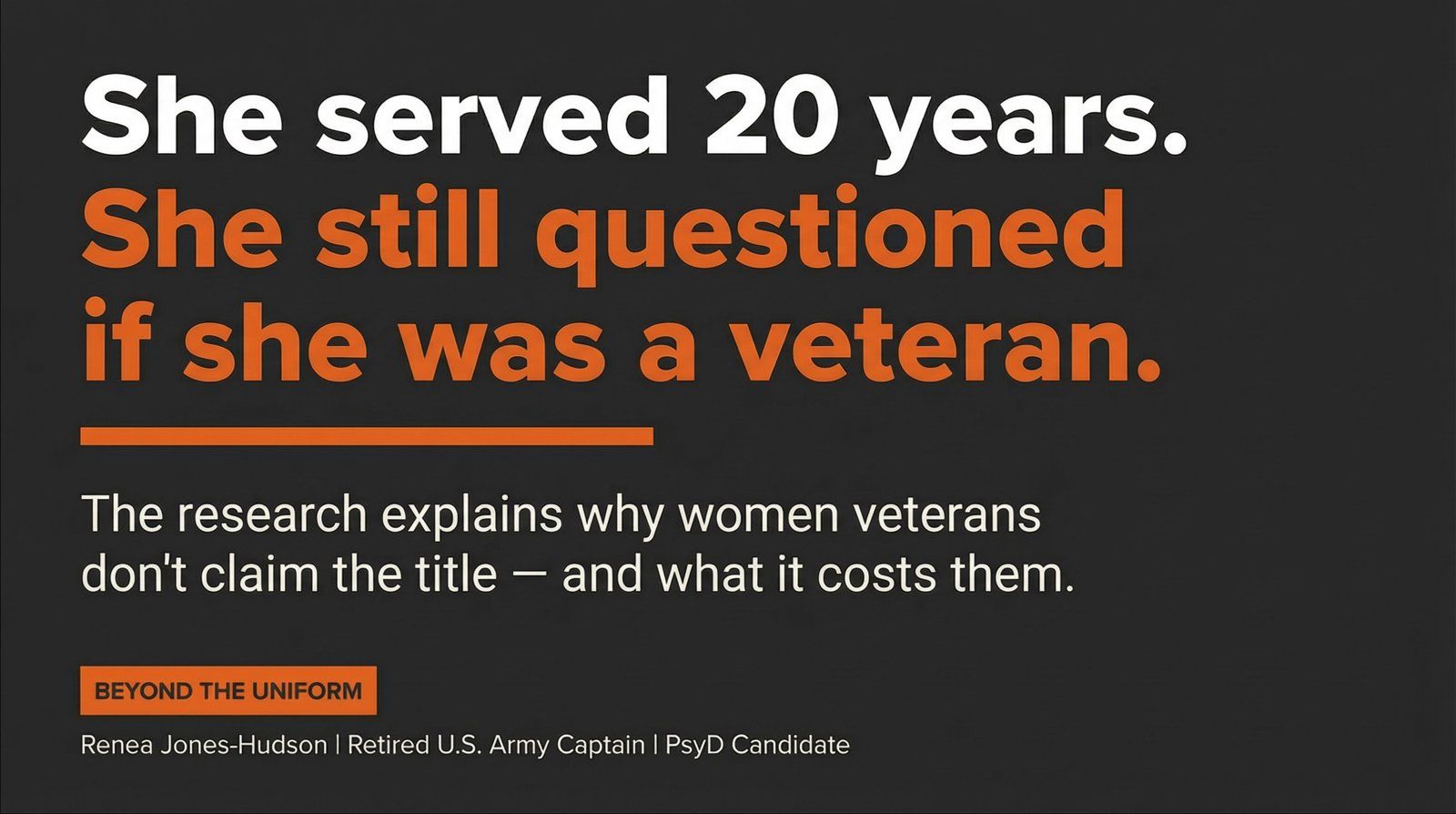
She served 20 years. She still questioned whether she was a veteran.
She parked in the veteran's spot at the grocery store. A stranger walked up and said, "I hope you served."
She had. Twenty years. But she still questioned whether she had the right to be there.
This is not an isolated story. The U.S. Department of Veterans Affairs has noted that it is not uncommon for a woman veteran to be lectured about parking in a "Reserved for Veteran" spot, and that even today some women struggle to consider themselves veterans [1]. If you are a woman veteran, this will probably feel uncomfortably familiar.
What the Research Found
Dr. Robbin Higgins, a retired Army lieutenant colonel, conducted a qualitative study with seven women veterans — all benefits-eligible, all with honorable service records — about their veteran identity [2].
Every one of them expressed pride in her military service. And not one of them self-identified as a veteran.
Seven women. All proud of their service. None claiming the title.
This is not a personal failure or a lack of confidence. The research identified five forces that push women veterans toward invisibility — and most of them have nothing to do with the women themselves.
The Five Forces Behind the Invisibility
1. The gap between expectation and reality. Women enter the military with ideals about service, opportunity, and equality. What many find is a culture that positions them as secondary — questioned, doubted, and required to prove their legitimacy in ways their male peers are not.
2. Sexism and gender harassment during service. When your time in uniform is marked by fighting to be taken seriously, it becomes complicated to claim that identity with pride afterward. The service was real. The sacrifice was real. But the experience was also painful in ways that make it hard to hold both truths at once.
3. Unconscious sexism. Over years of service, women absorb the message that they are not quite the same as "real" veterans. Not claiming parking spots. Not correcting people who assume the veteran in the family is a husband. Not wearing the title because no one seems to expect it.
4. "I am a veteran, but it's not my identity." Women in the study expressed pride in their service while distancing themselves from the label — in part because the cultural image of a veteran does not look like them. Women who served in support or non-combat roles often questioned whether their service "counted."
5. The absence of community. When women veterans cannot find other women who share their experience, they lose the mirror that reflects their identity back to them. Community is not just comfort. It is confirmation.
These findings echo the wider research. A study of 33 Canadian women veterans found that women are rarely recognized as veterans after service [3].
What Invisibility Costs
When women veterans do not claim their identity, they also do not claim what comes with it: the benefits, the networks, the professional credibility, and the rooms where their voice is needed and their perspective is missing.
And the story matters — not just for them, but for every woman in uniform today who is watching to see whether her service will be honored when she gets out. When women veterans make themselves invisible, they unintentionally send a message to the women behind them: this identity is not worth claiming.
I refuse to accept that.
Owning the Title
I served more than two decades in the United States Army. I was enlisted for 13 of those years and earned my commission through Officer Candidate School. I led soldiers. I made decisions under pressure.
I am a veteran. Not "I was in the military." A veteran. Full stop.
The first step of the OWNIT™ Framework is Own Your Story, and it was built for exactly this moment. Owning your story does not mean performing your service for anyone's validation. It means refusing to let someone else's limited imagination define what a veteran looks like.
The forces that push women veterans toward invisibility are cultural, institutional, and social. But the decision to step back into visibility is yours. It starts with the simplest, most radical act: saying, without apology, I am a veteran.
The OWNIT™ Framework is a proprietary group coaching methodology developed by Renea Jones-Hudson, founder of Beyond the Uniform Coaching and Consulting Group LLC.
References
- U.S. Department of Veterans Affairs. (n.d.). Celebrate International Women's Day with I Am Not Invisible 3.0 panel. VA News. https://news.va.gov/100820/celebrate-international-womens-day-with-i-am-not-invisible-3-0-panel/
- Higgins, R. C. (2021). [Dissertation title to be confirmed] [Doctoral dissertation, Northern Kentucky University].
- Eichler, M. (2022). Making military and Veteran women (in)visible: The continuity of gendered experiences in military-to-civilian transition. Journal of Military, Veteran and Family Health. https://doi.org/10.3138/jmvfh-2021-0077
Ready to lead beyond the uniform? Every engagement starts with a conversation. Book a discovery call with Renea.
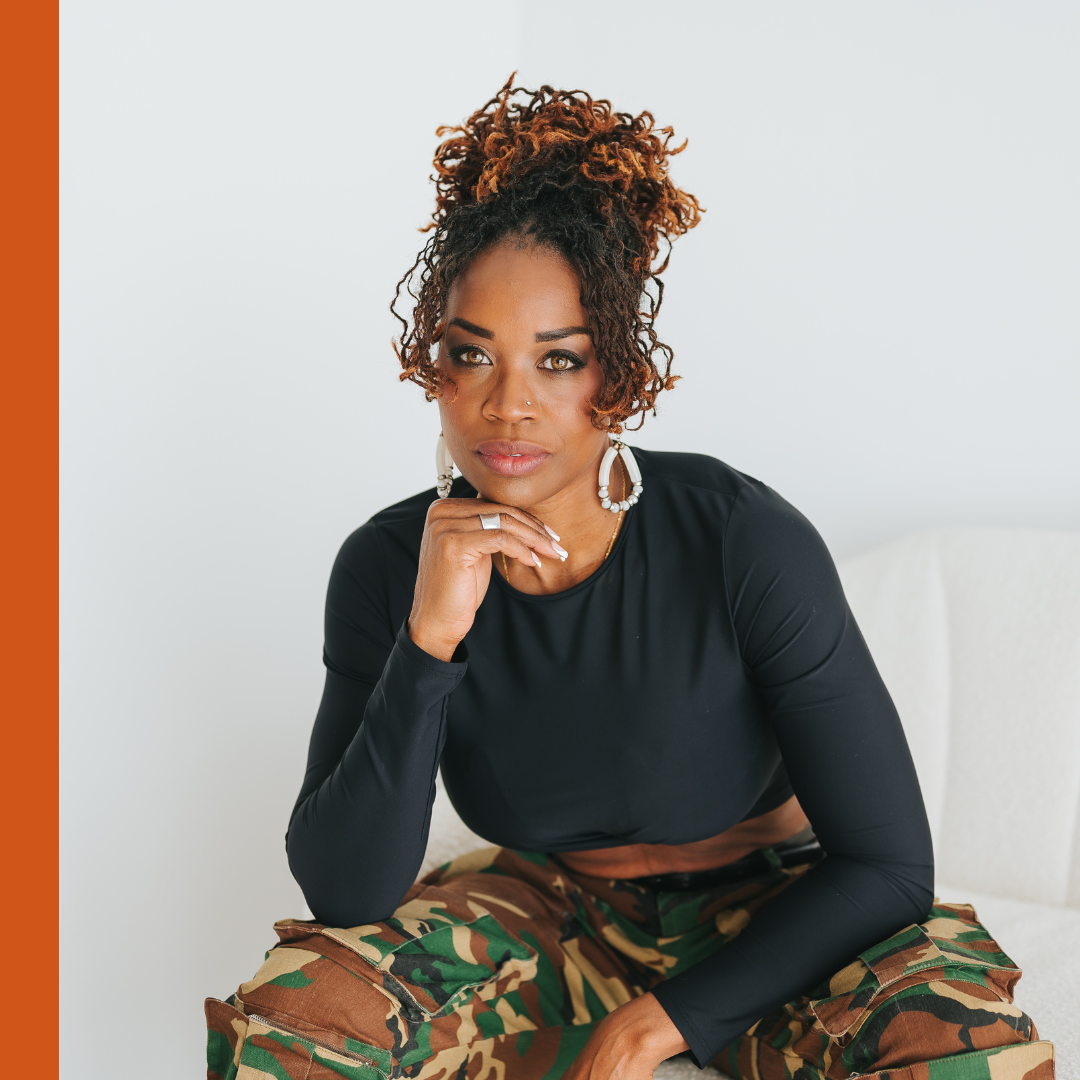
I’m Renea Jones-Hudson
Retired U.S. Army Captain, PsyD candidate, and founder of Beyond the Uniform. I help women veterans own their story and lead with confidence after service through OWNIT group coaching, speaking, and community.

Download your copy of the OWNIT Workbook